Gliomas harboring the H3 K27M mutation are typically aggressive and associated with poor prognoses1,2
You can identify H3 K27M alterations, which occur in about 40% of midline gliomas3

The H3 K27M mutation is characterized by the global loss of H3 K27 trimethylation (H3 K27me3)1
Molecular and cellular changes arising from the H3 K27M mutation1,4
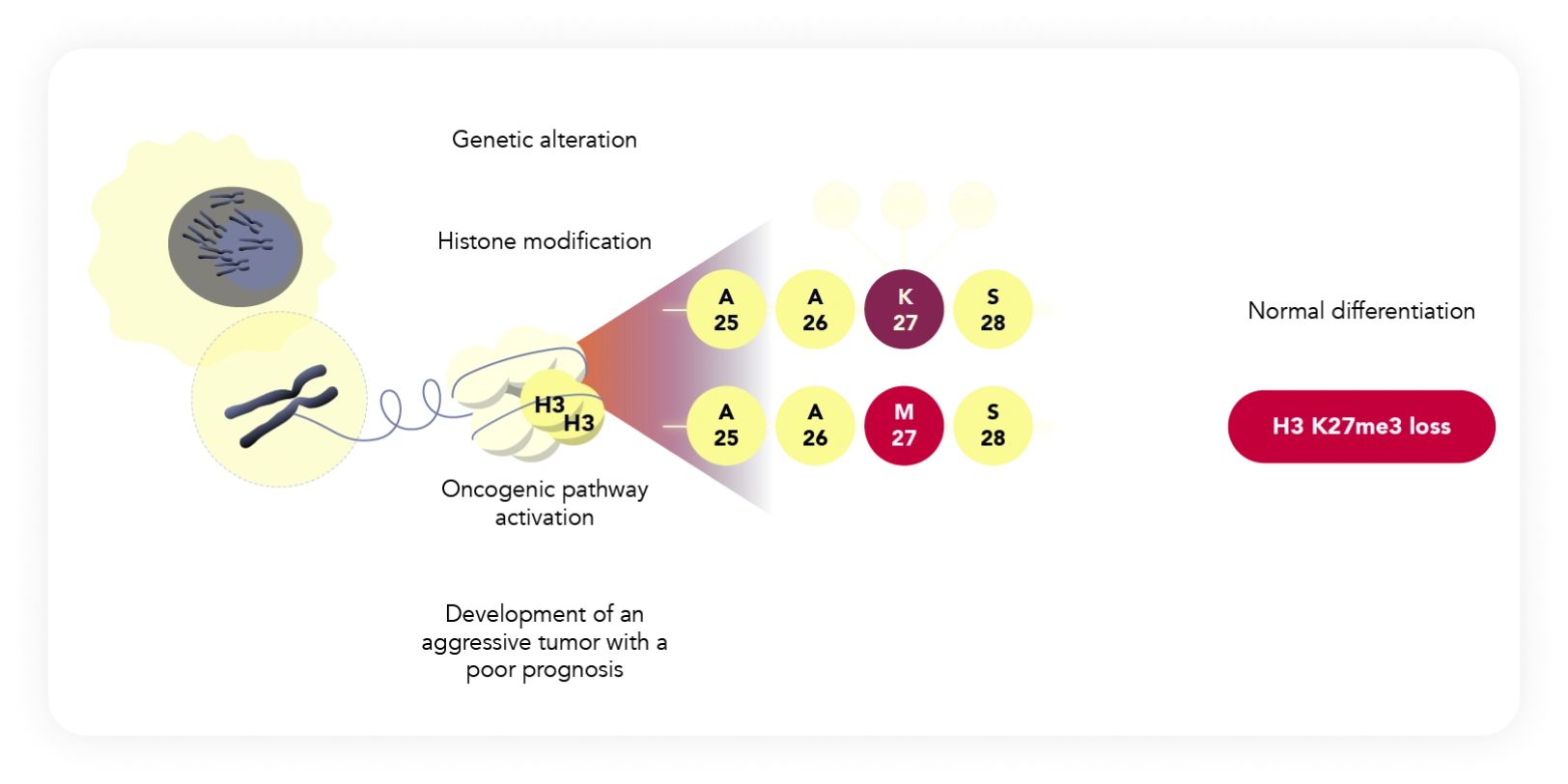
Global loss of H3 K27me3 results in widespread epigenetic dysregulation and oncogenic gene expression, which drives a highly aggressive tumor phenotype with poor outcomes.1,4
The WHO 2021 classification of CNS tumors recognizes H3 K27–altered DMG, a class inclusive of H3 K27M–mutant DMG, as a distinct tumor entity.5
The WHO classifies H3 K27M–mutant DMG as WHO CNS Grade 4 irrespective of diffuse glioma histology1,2
In 2021, the WHO revised its classification of CNS tumors to consider molecular biomarkers, as they can5:
- Improve diagnostic accuracy
- Provide better prognostic guidance
- Inform clinical trial eligibility
- Allow for the most informed, appropriate treatment plans
It’s integral to consider histological and molecular characteristics when diagnosing patients.2,6
The WHO classifies H3 K27–altered DMG as a distinct subtype of WHO CNS Grade 4 glioma due to its aggressive nature and poor outcomes.1,2
It also identifies alterations in H3 K27M as high-yield mutations, which has led the National Comprehensive Cancer Network® (NCCN®) to recommend screening for all relevant diagnostic markers in patients with brain tumors.6,7
There are an estimated 2000 cases of H3 K27M–mutant gliomas in the United States every year.3,* Find recommendations to help identify them.
CNS, central nervous system; DMG, diffuse midline glioma; H3, histone 3; K, lysine; M, methionine; WHO, World Health Organization.
*Inclusive of midline and nonmidline glioma.3
References: 1. Saratsis AM, Knowles T, Petrovic A, Nazarian J. H3K27M-mutant glioma: disease definition and biological underpinnings. Neuro Oncol. 2024;26(suppl 2):S92-S100. 2. Louis DN, Perry A, Wesseling P, et al. The 2021 WHO Classification of Tumors of the Central Nervous System: a summary. Neuro Oncol. 2021;23(8):1231-1251. 3. Data on file. Jazz Pharmaceuticals, Inc. 4. Weinberg DN, Allis CD, Lu C. Oncogenic mechanisms of histone mutations. Cold Spring Harb Perspect Med. 2017;7(1):a026443. 5. Horbinski C, Berger T, Packer RJ, Wen PY. Clinical implications of the 2021 edition of the WHO classification of central nervous system tumours. Nat Rev Neurol. 2022;18(9):515-529. 6. Referenced with permission from the NCCN Clinical Practice Guidelines in Oncology (NCCN Guidelines®) for Central Nervous System Cancers V.3.2026. © National Comprehensive Cancer Network, Inc. 2026. All rights reserved. Accessed August 28, 2026. To view the most recent and complete version of the guideline, go online to NCCN.org. NCCN makes no warranties of any kind whatsoever regarding their content, use or application and disclaims any responsibility for their application or use in any way. 7. Referenced with permission from the NCCN Clinical Practice Guidelines in Oncology (NCCN Guidelines®) for Pediatric Central Nervous System Cancers V.1.2026. © National Comprehensive Cancer Network, Inc. 2026. All rights reserved. Accessed July 24, 2026. To view the most recent and complete version of the guideline, go online to NCCN.org. NCCN makes no warranties of any kind whatsoever regarding their content, use or application and disclaims any responsibility for their application or use in any way.